
Ingredient glossary
Coco-Caprylate/Caprate
On your shelf ✓What Coco-Caprylate/Caprate does for your skin, who it suits, and what to watch for.
INCI: Coco-Caprylate/Caprate
In short: Coco-Caprylate/Caprate delivers softening and silicone like texture, suits most skin types, and the evidence behind it is moderate.
- What it does
- Softening, silicone like texture
- Best for
- Combination, Oily, Sensitive skin
- Evidence
- Moderate
- How long
- Straight away
What it actually is
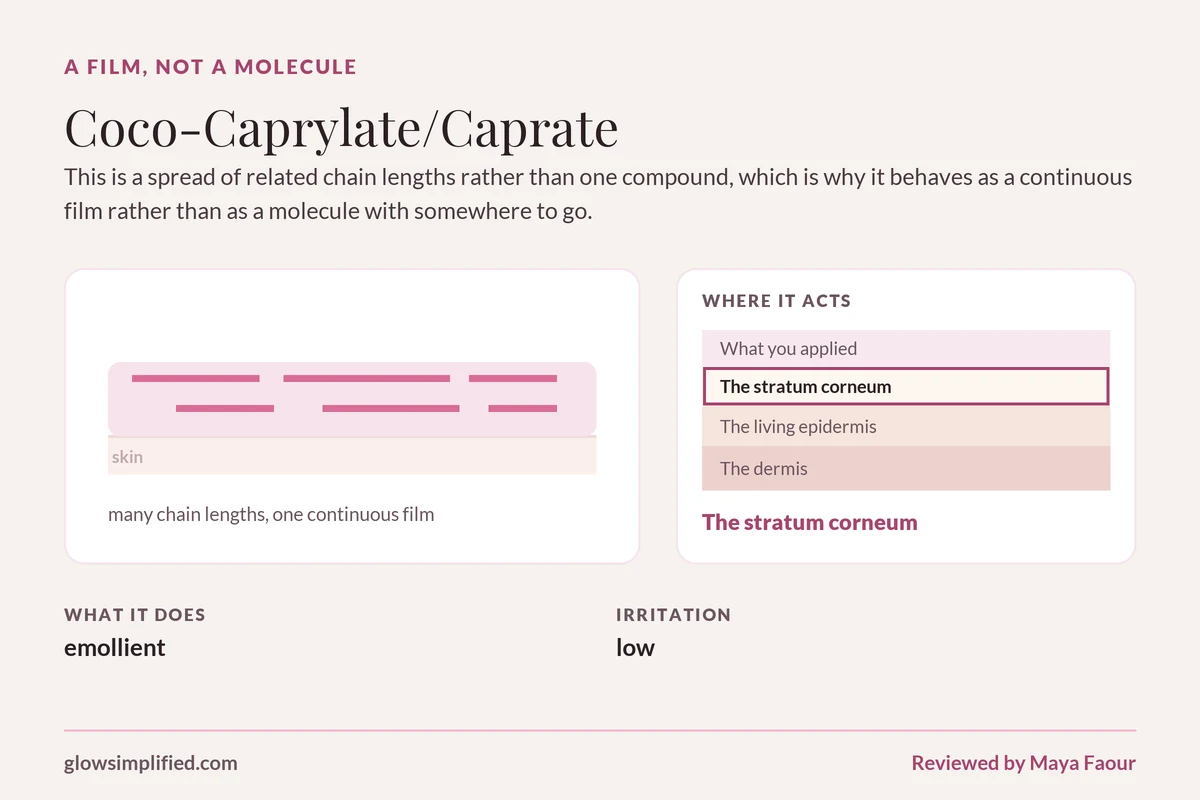
The Glow take
A comfort ingredient, and none the worse for it.
Coco-Caprylate/Caprate is here for feel and moisture, softening the skin and slowing water loss. More comfort than correction.
— Maya
What it does
- softening
- silicone like texture
moderate evidenceFormulator literature positions coco-caprylate/caprate as a green alternative to D4/D5 silicones with non-comedogenic, non-irritating profile.
On a label: usually effective at 2-15%.
Who it's for, and who should skip it
Tends to suit
- oily
- combo
- sensitive
Approach with care
No specific group flagged to avoid it.
- Clogs poresLow
- Irritation riskLow
How it fits each skin type
- DryNeutral
- CombinationSuits
- OilySuits
- SensitiveSuits
Where it fits in your routine
This one works on contact — there is nothing to wait for.
What that covers, and what it does not
Measured on: reduced surface friction and smoothing from the deposited lipid film, present as the film spreads (physical, not sensory).
A pure texture ingredient: hydration score 2, no active role, and its documented job is standing in for volatile silicone. A spread liquid ester physically bridges between corneocytes and lowers surface friction the moment the film forms — the same mechanism the brief allows for a silicone film — so there is nothing being remodelled and nothing to wait for. It is light and non-occlusive, so no TEWL benefit is being claimed on this line, and none has been timed.
Mechanism plus formulator literature positioning coco-caprylate/caprate as a D4/D5 replacement; no clinical time course exists for the film effect.
Plays well with
- humectants
- silicones
Coco-Caprylate/Caprate, answered
Is Coco-Caprylate/Caprate safe during pregnancy?
Yes. Coco-Caprylate/Caprate is considered safe to use during pregnancy and breastfeeding. As with anything, if you are unsure it is worth a quick word with your doctor or midwife.
Who should avoid Coco-Caprylate/Caprate?
No specific group is flagged to avoid Coco-Caprylate/Caprate. It is well tolerated by most skin. Still, introduce anything new one product at a time.
What concentration of Coco-Caprylate/Caprate actually works?
Coco-Caprylate/Caprate tends to do its job in the 2 to 15% range. Much lower and it is likely underdosed.
This, for every label you own
One ingredient is easy. A full label is where it gets confusing. The Ingredient Decoder reads any product and tells you the honest truth, ingredient by ingredient.