CeraVe Moisturizing Cream On your shelf ✓
Our read, in one look
Ceramide 3 is the reason to consider this moisturizer, with Ceramide 6-II behind it.
The case for it
- Ceramide 3, strong evidence for the barrier
- Ceramide 6-II, strong evidence for the barrier
- No fragrance, alcohol or parabens
Mind this
- Morning or evening, whichever suits your routine
- Add it on its own for a week or two, so you know what your skin is answering to
 Maya's read
CeraVe Moisturizing Cream is a moisturizer built around Glycerin, Petrolatum and Ceramide 3. It leans strongest on hydration, barrier repair. Best suited to dry, dehydrated and very dry skin. Nothing in it we'd flag for most people.
Skip it if you already own something similar: it's a solid, honest basic rather than a must-have upgrade.
The formula, drawn
Every ingredient in label order, coloured by the job it does here.
8 of the 24 sit above the 1% line. The other 16, hatched, are each under 1%. Widths show the ORDER on the label and nothing else: the label never discloses amounts, so we never draw them.
- Actives & signals
- Texture & base
- Preservation
- Not in our library yet
- No fragrance anywhere on the label
What it delivers
How it feels A rich, cushiony cream that sinks in slowly. Comforting on dry skin, possibly too much for oily skin in summer. (estimated from the formula)
What's in it that matters
Classic humectant with strong evidence for improving skin hydration and supporting barrier when combined with emollients.
Highly effective occlusive that prevents water loss and is gold standard for barrier repair, but feels heavy and greasy on oily skin.
Skin-identical ceramide that plays a key role in restoring and strengthening the skin barrier.
Ceramide that supports barrier integrity and helps smooth rough, dry skin when combined with other skin lipids.
Skin-identical sterol that is essential in barrier lipid mixtures and helps restore normal lamellar structure when combined with ceramides and fatty acids.
Water-binding molecule that increases hydration; works best under occlusive/emollient layers to reduce evaporation.
How to use it
Morning and/or night, after your thinner water-based steps and before heavier creams.
Where it acts
The same cross-section as our 500 dalton page, with this formula's actives on the layer each one works on. Depth is the anatomy's, never an ingredient's.
Skin surface
On top of the skin
- Petrolatumderived from what it is
The stratum corneum
- Ceramide 3derived from what it is
- Ceramide 6-IIderived from what it is
- Cholesterolderived from what it is
- Glycerinderived from what it is
- Hyaluronic acidderived from what it is
6 of this product's actives have a layer we can defend.
Against the average moisturizer
It scores lower than the median moisturizer on brightening.
On hydration, barrier repair, oil control and anti-aging it is level with the median, so that is not what sets it apart.
A median, not an average: one unusual formula should not move the middle. The numbers are the same 0 to 10 reads the comparison pages use.
The full ingredients list, decoded
Every ingredient on the label, in the order it appears (highest amount first). We link the 23 our library knows, name what each one does, and flag anything that can irritate or clog. The rest we leave plain, nothing is hidden.
All 24 ingredients, decoded
- Aqua/WaterSolvent (base)
- GlycerinHumectant
- Cetearyl AlcoholEmollient
- Caprylic/Capric TriglycerideEmollient
- Cetyl AlcoholEmollient
- Ceteareth-20Emulsifiermild irritant
- PetrolatumOcclusive
- DimethiconeOcclusive
- roughly the 1% lineThe rules only require descending order above 1%. From Phenoxyethanol down, these 16 can be listed in any order the brand likes, so position stops telling you anything.
- PhenoxyethanolPreservativemild irritant
- Behentrimonium MethosulfateConditioning agent
- Potassium PhosphateBuffer
- EthylhexylglycerinPreservative booster
- Sodium Lauroyl LactylateSurfactantmild irritant
- Disodium EDTAChelator
- Dipotassium PhosphateBuffer
- Ceramide NPBarrier lipid
- Ceramide APBarrier lipid
- PhytosphingosineSphingoid base
- CholesterolBarrier lipid
- Xanthan GumThickener
- CarbomerThickener
- Sodium HyaluronateHumectant
- TocopherolAntioxidantmild irritant
- Ceramide EOPBarrier lipid
Worth knowing: Cholesterol sits below that line. It is in there, and the label does not tell you how much. That is not the same as saying it is too little to matter.
Copy the raw INCI list
Aqua/Water, Glycerin, Cetearyl Alcohol, Caprylic/Capric Triglyceride, Cetyl Alcohol, Ceteareth-20, Petrolatum, Dimethicone, Phenoxyethanol, Behentrimonium Methosulfate, Potassium Phosphate, Ethylhexylglycerin, Sodium Lauroyl Lactylate, Disodium EDTA, Dipotassium Phosphate, Ceramide NP, Ceramide AP, Phytosphingosine, Cholesterol, Xanthan Gum, Carbomer, Sodium Hyaluronate, Tocopherol, Ceramide EOP
Read enough? Find it on amazon.com →
We don't make or sell skincare of our own. So there's nothing here we're trying to push, just an honest read of whether this formula suits your skin.
Against your shelf
Read from your own shelf, in your browser. We never see it.
Compare it with…
All 12 comparisons
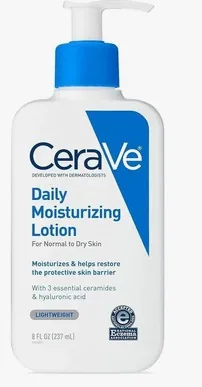
- Moisturizing Cream vs CeraVe Daily Moisturizing Lotion
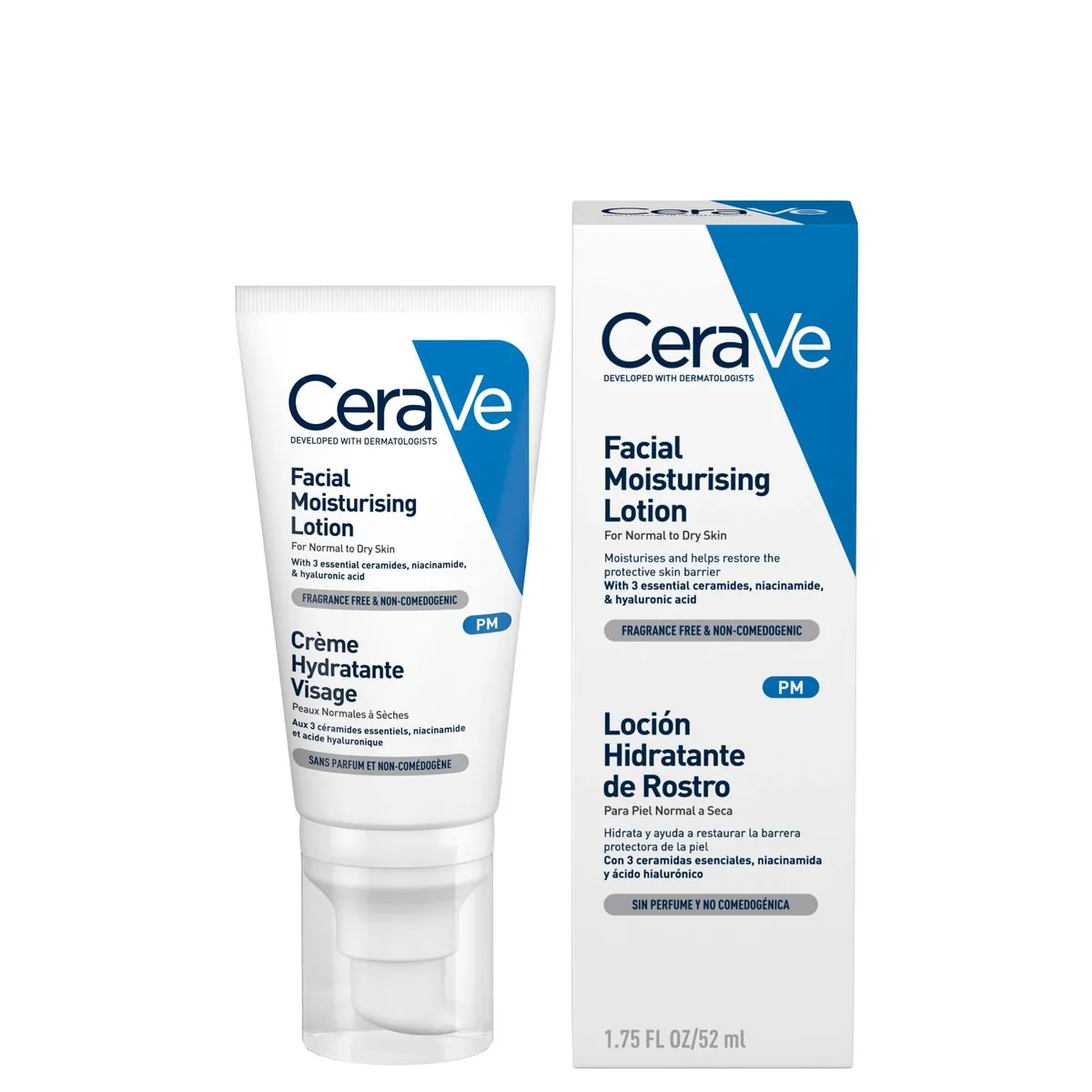
- Moisturizing Cream vs CeraVe PM Facial Moisturizing Lotion
- Moisturizing Cream vs Cetaphil Moisturizing Cream
- Moisturizing Cream vs The Ordinary Natural Moisturizing Factors + HA
- Moisturizing Cream vs La Roche-Posay Cicaplast Baume B5+
- Moisturizing Cream vs Bioderma Atoderm Intensive Baume
- Moisturizing Cream vs CeraVe SA Lotion for Rough & Bumpy Skin
- Moisturizing Cream vs Neutrogena Hydro Boost Water Gel
- Moisturizing Cream vs Cetaphil Moisturizing Lotion
- Moisturizing Cream vs La Roche-Posay Effaclar Duo+ M
- Moisturizing Cream vs NIVEA Creme
- Moisturizing Cream vs Eau Thermale Avène Cicalfate+ Restorative Protective Cream
Common questions
Is CeraVe Moisturizing Cream good for dry skin?
By our read of the formula, it suits dry, dehydrated, very dry skin. CeraVe Moisturizing Cream is a moisturizer built around Glycerin, Petrolatum and Ceramide 3. It leans strongest on hydration, barrier repair. Best suited to dry, dehydrated and very dry skin. Nothing in it we'd flag for most people.
How do you use CeraVe Moisturizing Cream?
Morning and/or night, after your thinner water-based steps and before heavier creams.
What are the key ingredients in CeraVe Moisturizing Cream?
The actives that do the work are Glycerin, Petrolatum, Ceramide 3, Ceramide 6-II, Cholesterol, Hyaluronic acid. The rest of the list is texture, preservatives and emulsifiers that hold the formula together.
Does CeraVe Moisturizing Cream contain fragrance?
No. By our reading of the ingredient list it is fragrance-free, which is a plus for sensitive or reactive skin.
What the 3D scene shows
The scene shows CeraVe Moisturizing Cream beside a cross-section of skin, with 3 of its ingredients drawn at the layer each one acts on and at one shared molecular scale: Ceramide 3 and Cholesterol and Glycerin in the stratum corneum, the dead outer layer where most skincare works. Depths come from the same sourced layer data as the rest of this site, and any ingredient whose layer is not established is left out rather than guessed.