Asked through My Shelf
My toner and cleanser clash with the retinal. What do I do?
Answered from the ingredient base, checked by Maya.
The retinal is the one that matters here, and the toner is the one that fights it. An acid toner (salicylic, glycolic, lactic) and a retinoid both speed up how fast your skin sheds, so on the same evening they stack irritation and wear down the barrier. Our data calls this pair a clash: 135 of the 479 pairings we have answered land here.
The fix is not to drop the toner. Use them on alternate evenings: retinal one night, the acid toner the next, so your skin only handles one of them at a time. Ease the retinal in slowly, two nights a week for the first fortnight, and build up only while your skin stays comfortable. If it turns tight, flaky or starts to sting, drop back a step for a few days.
The cleanser is a different story. A cleanser only joins the clash if it carries an acid itself, a salicylic or glycolic wash, for example. A plain hydrating cleanser sits on the skin for thirty seconds and rinses off; it does not stack with the retinal, whatever night you use it. Check its label: if there is no acid in it, keep it every night and leave the alternating to the toner.
Spot the acid on a label
- Salicylic Acid
- Capryloyl Salicylic Acid
- Lactic Acid
- Glycolic Acid
- Mandelic Acid
- Gluconolactone
- Lactobionic Acid
- Ammonium Lactate
- Betaine Salicylate
- Malic Acid
- Tartaric Acid
One acid toner, one retinoid, never on the same evening. That is the whole rule.
Bottles like the reader's
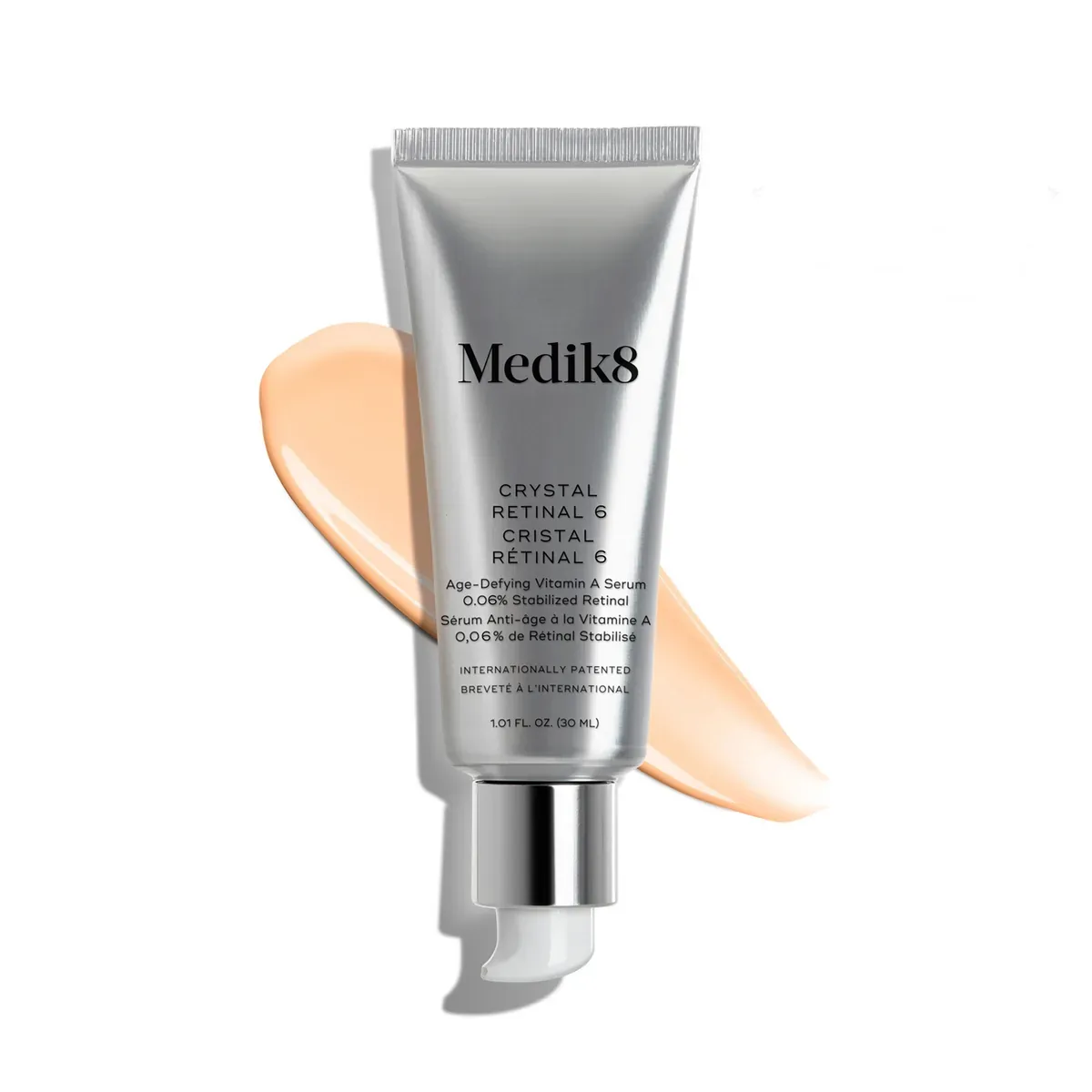 SerumMedik8 Crystal Retinal 6
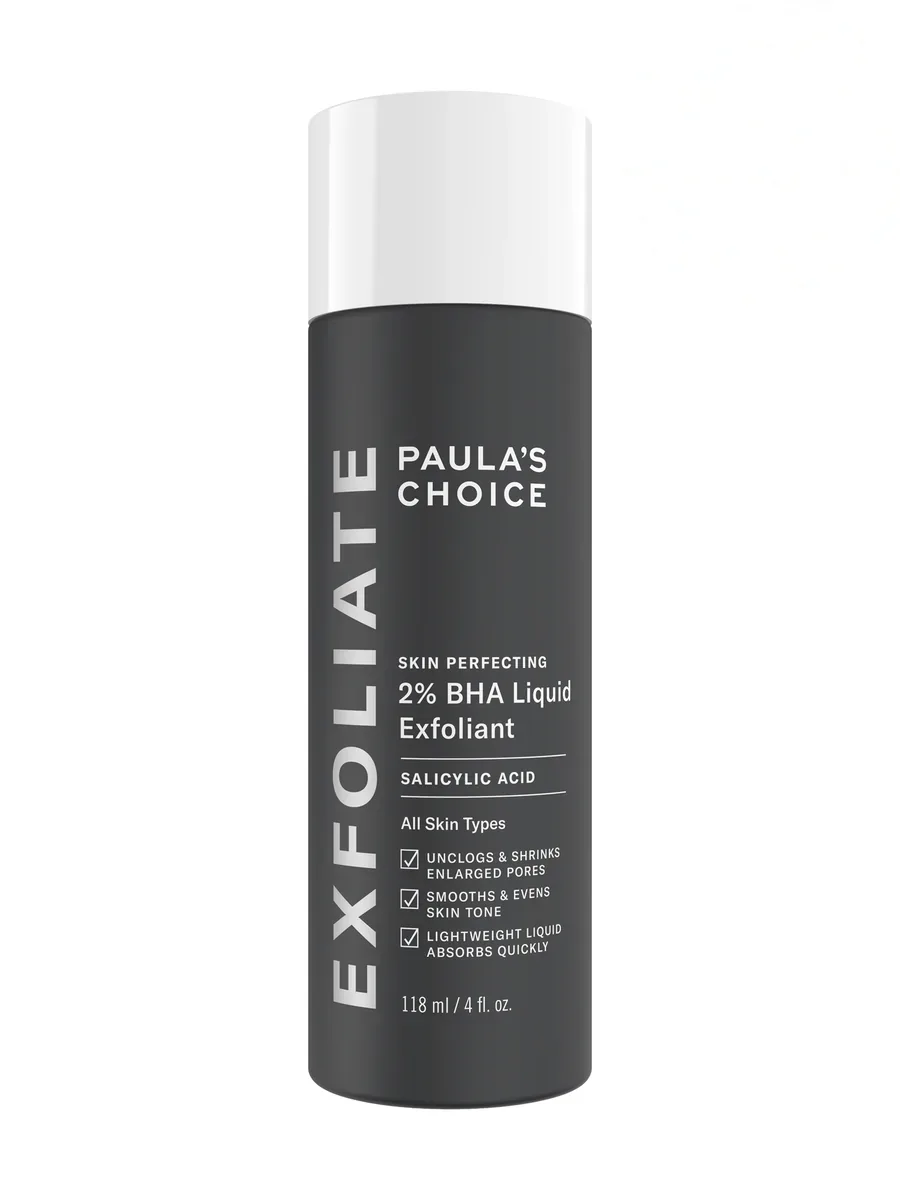 ExfoliantPaula's Choice Skin Perfecting 2% BHA Liquid Exfoliant
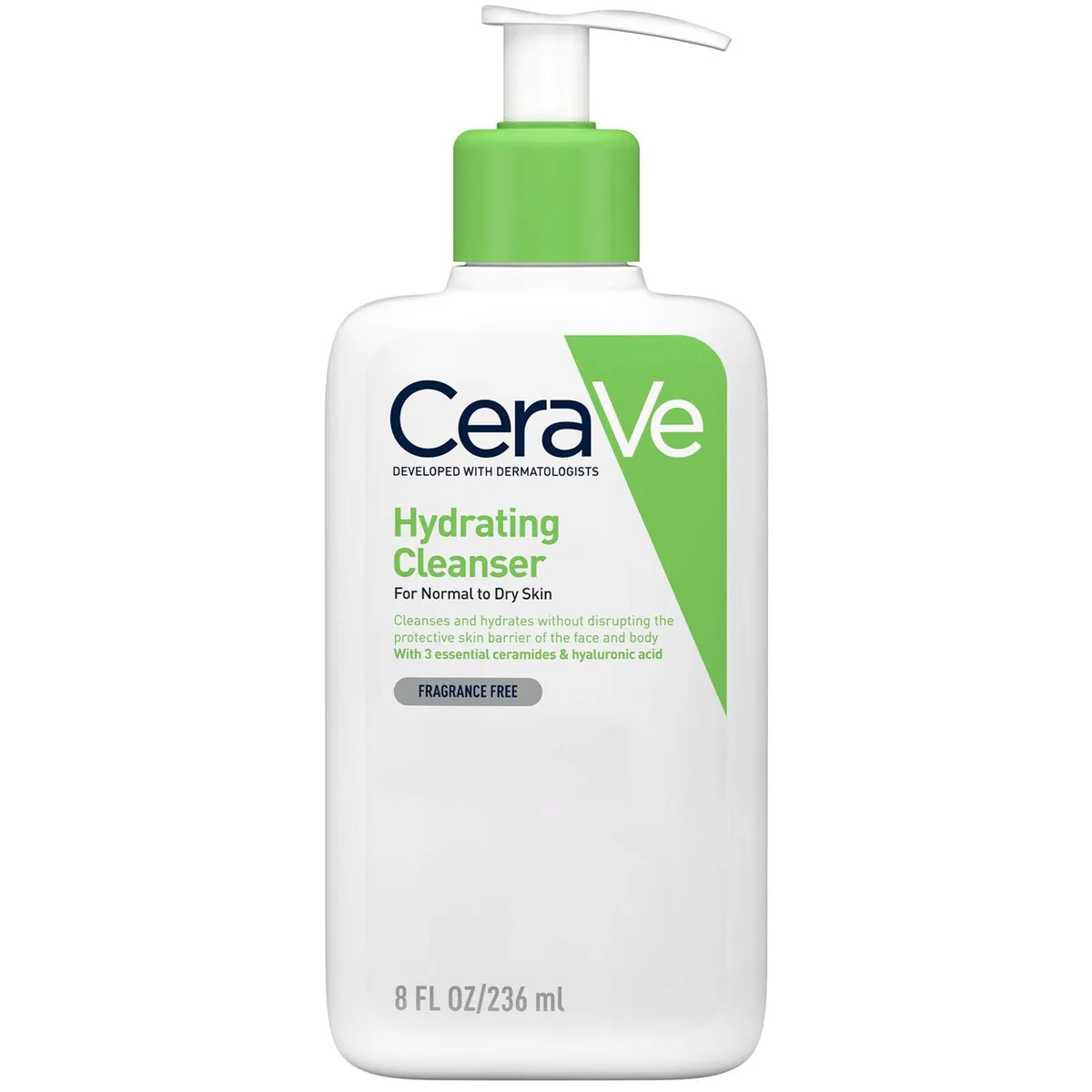 CleanserCeraVe Hydrating Cleanser
What the data says
Use with careRetinal and Salicylic acid (BHA)
Use these with care. Retinoids and exfoliants both speed up cell turnover, so on the same night their irritation adds up, most of all while your skin is new to either.
Do this: Use them on alternate nights rather than the same evening; once both are old friends, your skin decides.
Which one goes first? Not on the same night. Use Retinal and Salicylic acid (BHA) on alternate evenings rather than layering them together.
- Mukherjee et al., "Retinoids in the treatment of skin aging" (Clinical Interventions in Aging, 2006)
- Kornhauser et al., "Applications of hydroxy acids" (Clinical, Cosmetic and Investigational Dermatology, 2010)
How much retinal did the trials use?
How much salicylic acid (BHA) did the trials use?
RetinalSolid and proven
The one vehicle-controlled trial tested 0.05% for 44 weeks in 125 people and cut measured wrinkle depth and roughness where the vehicle changed nothing.
Why we say this
- The water-loss, hydration and pigment figures come from a separate 40-person trial with no placebo arm, so they are before-and-after readings on people using a cream: texture, TEWL and hydration improved on both 0.05% and 0.1% with no significant difference between them, and a 6.5% drop in melanin index reached significance only in the 0.1% group.
- Most of this work was run or funded by companies selling retinaldehyde.
Salicylic acid (BHA)Solid and proven
Salicylic acid has decades of use and some older placebo-controlled support for clearing comedones, but the 2024 American Academy of Dermatology guideline…
Why we say this
- Salicylic acid has decades of use and some older placebo-controlled support for clearing comedones, but the 2024 American Academy of Dermatology guideline recommends it only conditionally, on low-certainty evidence from a single randomised trial — unlike benzoyl peroxide and retinoids, which it recommends strongly.
- The 0.5–2% figure is the concentration range the US OTC acne monograph permits (21 CFR 333.310), not a measured effective dose; in EU cosmetics 2% is a safety ceiling rather than a target.
- 21 CFR 333.310 (US federal regulation)
- PMID 38300170 · abstract
- PMID 1535287 · abstract
- SCCS/1601/18 (EU Scientific Committee opinion)
The question, answered
My toner and cleanser clash with the retinal. What do I do?
The retinal is the one that matters here, and the toner is the one that fights it. An acid toner (salicylic, glycolic, lactic) and a retinoid both speed up how fast your skin sheds, so on the same evening they stack irritation and wear down the barrier. Our data calls this pair a clash: 135 of the 479 pairings we have answered land here.
Can I use a salicylic acid cleanser with retinol or retinal?
Our ingredient base treats salicylic acid and a retinoid as a clash whatever the bottle, so keep an acid cleanser to the nights without the retinal. A cleanser with no acid can be used every night.
Can I use an acid toner and retinal on the same night?
No. Use them on alternate evenings so your skin handles one exfoliating active at a time.
Which goes first if I still want both?
Neither: the pair page's order is "not on the same night".
Does a glycolic acid toner clash with retinal too?
Yes, the same way: retinoids and exfoliating acids both speed up cell turnover and stack irritation together. Alternate nights, and use sunscreen in the morning because glycolic acid makes skin more sensitive to UV.
General guidance from the ingredient base, not medical advice. How we reach every verdict → Your own question can go the same way: the box is in My Shelf.