How much salicylic acid (BHA) do you need? 0.5%+
The effective salicylic acid (BHA) percentage, by the vehicle-controlled trials, starts at 0.5% (by the pad maker’s own reading of its unpublished placebo studies); no published dose comparison sets a ceiling.
0.5%, Zander 1992.
Floor 0.5%, the pad maker's own reading: A review of four clinical studies and a comedolytic assay attests to the efficacy and safety of 0.5% and 2% solutions of salicylic acid for the treatment of acne vulgaris. (Zander 1992: three placebo-controlled pad studies at 0.5% and 2%, unpublished, summarised by the maker; the US 0.5 to 2% acne monograph, 21 CFR 333.310, rests on them).
What salicylic acid (BHA) percentage is effective?
Floor 0.5%, the pad maker's own reading: A review of four clinical studies and a comedolytic assay attests to the efficacy and safety of 0.5% and 2% solutions of salicylic acid for the treatment of acne vulgaris.
0.5%+
The trials, and what they used
- (Zander 1992: three placebo-controlled pad studies at 0.5% and 2%, unpublished, summarised by the maker; the US 0.5 to 2% acne monograph, 21 CFR 333.310, rests on them).
- No independent vehicle-controlled trial of a leave-on salicylic acid at a stated percentage is published.
- What is published pins 2% against approved actives: a 2% salicylic acid hydrogel matched adapalene gel on lesion clearance in 500 patients over 12 weeks (Ye 2024), a 2% cream with 0.5% chloroxylenol matched 5% benzoyl peroxide in 37 patients over 12 weeks, double-blind (Boutli 2003), and a 2% cleanser reduced comedones where a 10% benzoyl peroxide wash did not in a 30-patient crossover (Shalita 1989).
- No dose comparison found.
- EU Annex III/98 (Regulation 2022/1181, after SCCS/1601/18) allows 2% in leave-on products and 3% in rinse-off hair products; a regulatory ceiling, not an effect ceiling.
- PMID 38590107 · abstract
- PMID 14708455 · abstract
- PMID 2525420 · abstract
- PMID 1535287 · abstract
- 21 CFR 333.310 (US federal regulation)
- SCCS/1601/18 (EU Scientific Committee opinion)
Is 2% salicylic acid (BHA) too much?
Nobody has measured it: no published dose comparison sets a ceiling for salicylic acid (BHA), so 2% is above the 0.5% floor the trials used, not above a measured maximum, and the trials say nothing about whether more does more. The highest dose in the literature is another use: 60% on plantar warts, an ointment used with monochloroacetic acid crystals (Steele 1988).
Treatments were well tolerated.
The highest dose in the literature, in the paper’s words
- Treatments were well tolerated.
No published dose comparison sets a ceiling for salicylic acid (bha). A declared percentage above 0.5% is above the trials' floor, not above a measured maximum: the trials say from 0.5% it works, and say nothing about whether more does more.
What does the salicylic acid (BHA) percentage on a label tell you?
A name that states a percentage ("Salicylic acid (BHA) 0.5%") is the only amount a cosmetic label ever declares, so it is the one number that can be read against the trials: at or above the 0.5% floor, or below it.
A name without a percentage leaves the position. The rules make a brand list ingredients in descending order of amount down to 1%, and in any order below it, so salicylic acid (bha) above the 1% line is at least 1% and salicylic acid (bha) below it can be any trace the brand likes. The floor the trials worked from is 0.5%, and a position alone cannot tell you whether a label reaches it.
The salicylic acid (BHA) percentages in our catalogue
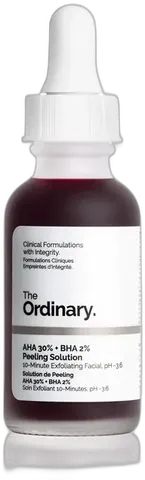 2%The Ordinary AHA 30% + BHA 2% Peeling Solution
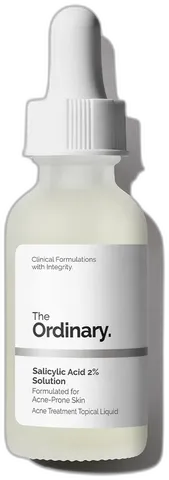 2%The Ordinary Salicylic Acid 2% Solution
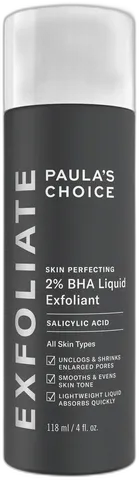 2%Paula's Choice Skin Perfecting 2% BHA Liquid Exfoliant
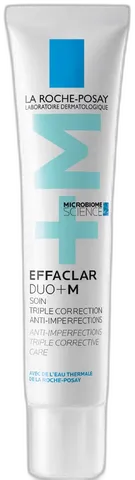 33th of 35La Roche-Posay Effaclar Duo+ M
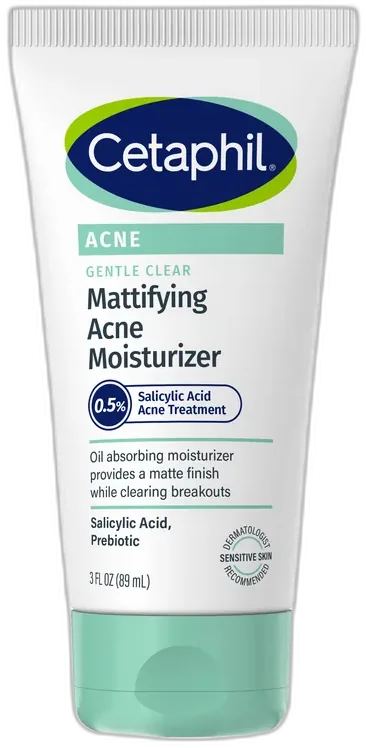 1st of 37Cetaphil Gentle Clear Mattifying Acne Moisturizer
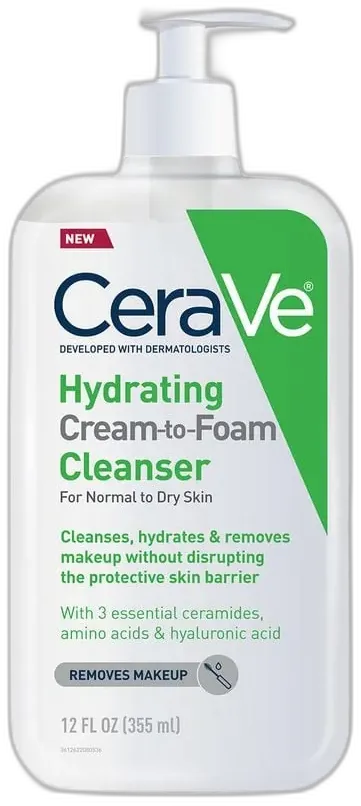 29th of 60CeraVe Hydrating Cream-to-Foam Cleanser
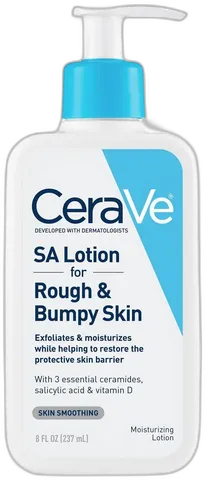 5th of 26CeraVe SA Lotion for Rough & Bumpy Skin
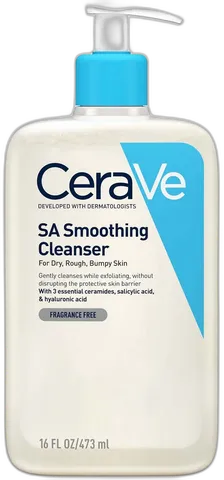 14th of 24CeraVe SA Smoothing Cleanser
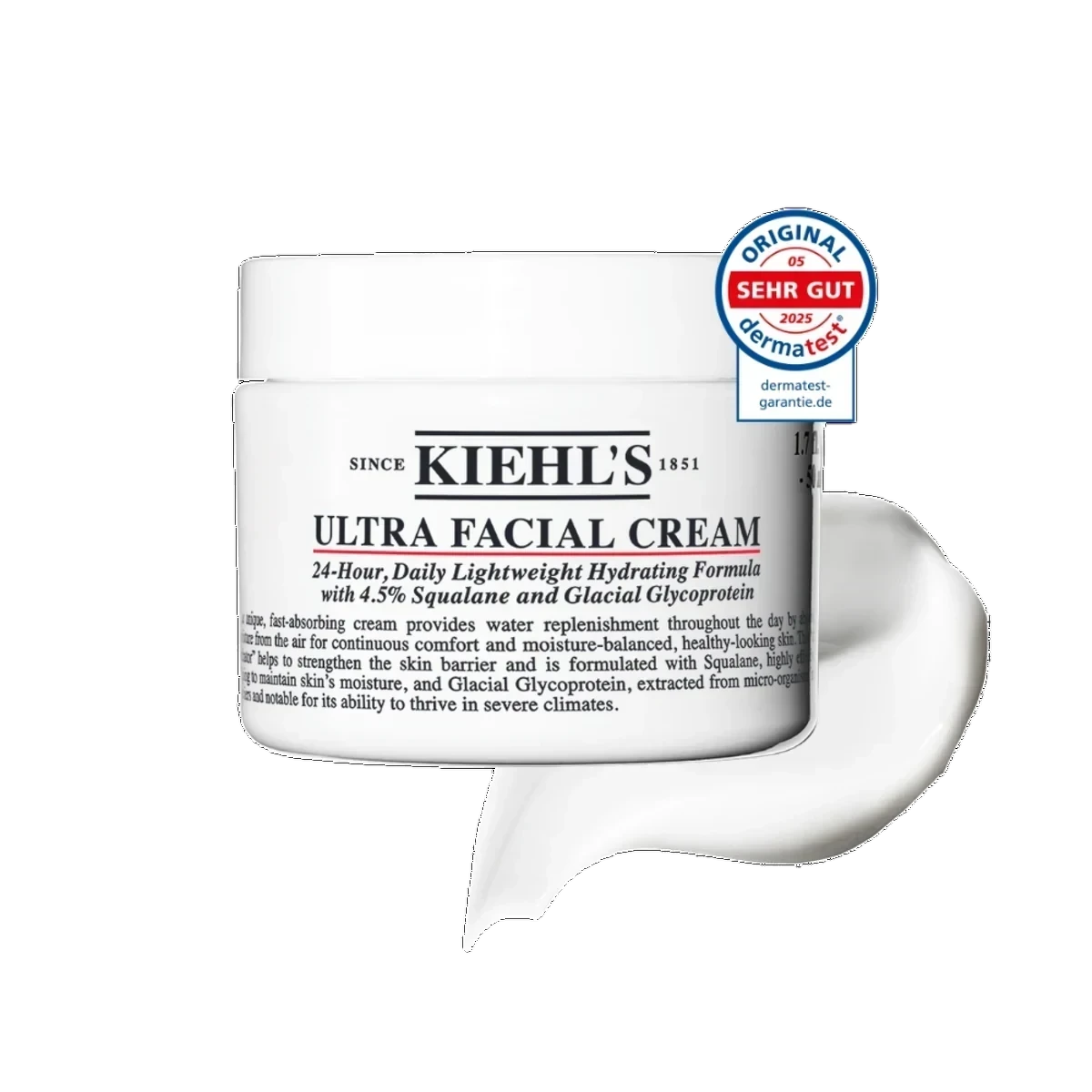 32th of 35Kiehl's Ultra Facial Cream
3 labels declare a percentage on the name, read against the trials:
- The Ordinary AHA 30% + BHA 2% Peeling SolutionSalicylic acid (BHA) is declared at 2%: above the 0.5% the trials used.
- The Ordinary Salicylic Acid 2% SolutionSalicylic acid (BHA) is declared at 2%: above the 0.5% the trials used.
- Paula's Choice Skin Perfecting 2% BHA Liquid ExfoliantSalicylic acid (BHA) is declared at 2%: above the 0.5% the trials used.
6 labels carry it without a number, so the position is all there is:
- La Roche-Posay Effaclar Duo+ MSalicylic acid (BHA) sits 33th of 35, below the 1% line; the label does not say how much, and the trials worked from 0.5%.
- Cetaphil Gentle Clear Mattifying Acne MoisturizerSalicylic acid (BHA) sits 1st of 37, above the 1% line; the label does not say how much, and the trials worked from 0.5%.
- CeraVe Hydrating Cream-to-Foam CleanserSalicylic acid (BHA) sits 29th of 60, below the 1% line; the label does not say how much, and the trials worked from 0.5%.
- CeraVe SA Lotion for Rough & Bumpy SkinSalicylic acid (BHA) sits 5th of 26, above the 1% line; the label does not say how much, and the trials worked from 0.5%.
- CeraVe SA Smoothing CleanserSalicylic acid (BHA) sits 14th of 24, below the 1% line; the label does not say how much, and the trials worked from 0.5%.
- Kiehl's Ultra Facial CreamSalicylic acid (BHA) sits 32th of 35, below the 1% line; the label does not say how much, and the trials worked from 0.5%.
Read on
- Salicylic acid (BHA): the glossary page what it does, who it suits, where it fits
- Salicylic acid (BHA) vs Lactic acid
- Salicylic acid (BHA) vs Glycolic acid
- Salicylic acid (BHA) vs Mandelic Acid
- Salicylic acid (BHA) vs Gluconolactone
- Salicylic acid (BHA) vs Lactobionic Acid
- Salicylic acid (BHA) vs Willow Bark Extract
Other actives with a dose the trials pinned:
- Niacinamide 2%+
- Vitamin C (LAA) 5%+
- Retinol 0.075 to 0.3%
- Lactic acid 8%+
- Glycolic acid 5%+
- Retinal 0.05 to 0.1%
- Retinyl Retinoate 0.06%+
- Tretinoin 0.025%+
- Adapalene 0.1%+
- Tazarotene 0.045%+
- Azelaic Acid 15%+
- THD Ascorbate 1%+
- Sodium Ascorbyl Phosphate 5%+
- Palmitoyl Pentapeptide-4 0.0003%+
- Caffeine 2%+
- Benzoyl Peroxide 2.5 to 5%
- Tea Tree Oil 5%+
- Hydroquinone 4%+
- Bifida Ferment Lysate 10%+
- Thiamidol 0.2%+
- Cysteamine 5%+
- Menthol 0.1 to 5%
- Peppermint Oil 0.5%+
- N-Acetyl Glucosamine 2%+
- Alpha Lipoic Acid 5%+
- Ammonium lactate 12%+
- Acetylated Hyaluronic Acid 0.1%+
- 4-n-Butylresorcinol 0.1%+
- 4-t-Butylcyclohexanol 0.4%+
- Sphingomonas Ferment Extract 2%+