How much palmitoyl pentapeptide-4 do you need? 0.0003%+
The effective palmitoyl pentapeptide-4 percentage, by the vehicle-controlled trials, starts at 0.0003%; no published dose comparison sets a ceiling.
Give it eight to twelve weeks, and possibly less: that is simply when it was measured.
how it was measured
Measured on fine line and wrinkle reduction by quantitative image analysis and expert grader assessment; measured at the trial's end, so possibly sooner.PMID 18492182
What palmitoyl pentapeptide-4 percentage is effective?
One vehicle-controlled trial, run by the maker of the product: a moisturiser with 3 ppm pal-KTTKS, which is 0.0003%, against the same moisturiser without it, split-face and double-blind in 93 women aged 35 to 55 for 12 weeks, reduced fine lines and wrinkles on quantitative image analysis and expert grading (Robinson 2005, Procter and Gamble).
0.0003%+
The trials, and what they used
- Products that name a percentage sit between 0.0003% and 0.003%, ten times the trial's level, and no trial compares the two, so the floor is 3 ppm and the ceiling is unmeasured.
- A 4-week P&G study of finished products containing Pal-KT and Pal-KTTKS against no treatment improved crow's-feet smoothness in 42 and 35 women but mixes several actives (Kaczvinsky 2009).
- No dose comparison found.
Is more than 0.0003% palmitoyl pentapeptide-4 better?
Nobody has measured it: no published dose comparison sets a ceiling for palmitoyl pentapeptide-4, so a percentage above 0.0003% is above the trials' floor, not above a measured maximum. Only one strength has ever been tested, 0.0003% (Robinson 2005), and it was tolerated.
Pal-KTTKS was well tolerated by the skin and provided significant improvement vs. placebo control for reduction in wrinkles/fine lines by both quantitative…
The highest dose tested, in the paper’s words
- Pal-KTTKS was well tolerated by the skin and provided significant improvement vs. placebo control for reduction in wrinkles/fine lines by both quantitative technical and expert grader image analysis.
No published dose comparison sets a ceiling for palmitoyl pentapeptide-4. A declared percentage above 0.0003% is above the trials' floor, not above a measured maximum: the trials say from 0.0003% it works, and say nothing about whether more does more.
What does the palmitoyl pentapeptide-4 percentage on a label tell you?
A name that states a percentage ("Palmitoyl Pentapeptide-4 0.0003%") is the only amount a cosmetic label ever declares, so it is the one number that can be read against the trials: at or above the 0.0003% floor, or below it.
A name without a percentage leaves the position. The rules make a brand list ingredients in descending order of amount down to 1%, and in any order below it, so palmitoyl pentapeptide-4 above the 1% line is at least 1% and palmitoyl pentapeptide-4 below it can be any trace the brand likes. The floor the trials worked from is 0.0003%, and a position alone cannot tell you whether a label reaches it.
The palmitoyl pentapeptide-4 percentages in our catalogue
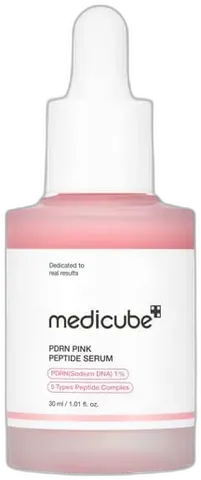 9th of 40Medicube PDRN Pink Peptide Serum
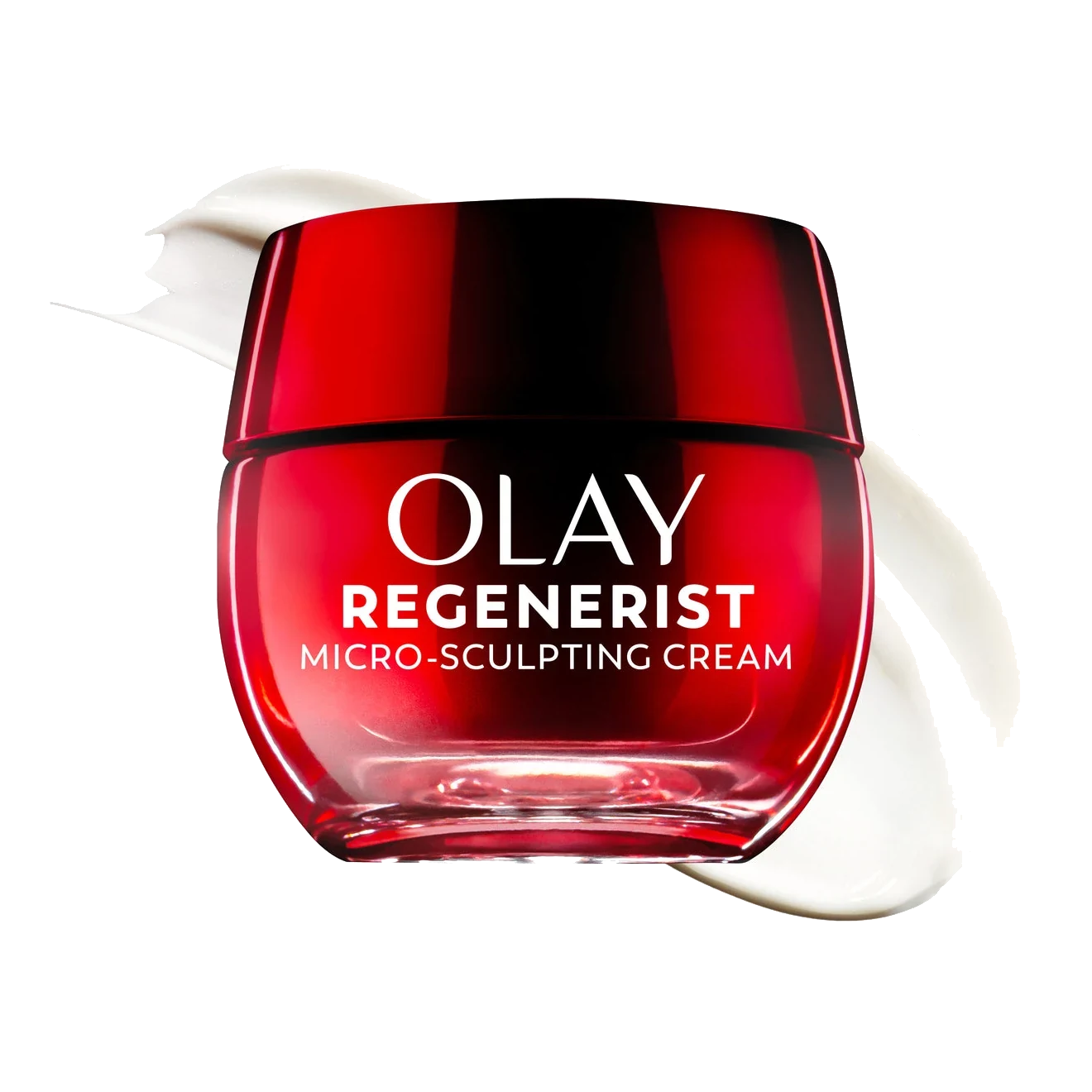 10th of 30OLAY Regenerist Micro-Sculpting Cream (US formula)
2 labels carry it without a number, so the position is all there is:
- Medicube PDRN Pink Peptide SerumPalmitoyl Pentapeptide-4 sits 9th of 40; the label does not say how much, and the trials worked from 0.0003%.
- OLAY Regenerist Micro-Sculpting Cream (US formula)Palmitoyl Pentapeptide-4 sits 10th of 30, above the 1% line; the label does not say how much, and the trials worked from 0.0003%.
Read on
- Palmitoyl Pentapeptide-4: the glossary page what it does, who it suits, where it fits
- Palmitoyl Pentapeptide-4 vs Niacinamide
- Palmitoyl Pentapeptide-4 vs Vitamin C (LAA)
- Palmitoyl Pentapeptide-4 vs Retinol
- Palmitoyl Pentapeptide-4 vs Retinal
- Palmitoyl Pentapeptide-4 vs Hydroxypinacolone Retinoate
- Palmitoyl Pentapeptide-4 vs Retinyl Palmitate
Other actives with a dose the trials pinned:
- Niacinamide 2%+
- Vitamin C (LAA) 5%+
- Retinol 0.075 to 0.3%
- Salicylic acid (BHA) 0.5%+
- Lactic acid 8%+
- Glycolic acid 5%+
- Retinal 0.05 to 0.1%
- Retinyl Retinoate 0.06%+
- Tretinoin 0.025%+
- Adapalene 0.1%+
- Tazarotene 0.045%+
- Azelaic Acid 15%+
- THD Ascorbate 1%+
- Sodium Ascorbyl Phosphate 5%+
- Caffeine 2%+
- Benzoyl Peroxide 2.5 to 5%
- Tea Tree Oil 5%+
- Hydroquinone 4%+
- Bifida Ferment Lysate 10%+
- Thiamidol 0.2%+
- Cysteamine 5%+
- Menthol 0.1 to 5%
- Peppermint Oil 0.5%+
- N-Acetyl Glucosamine 2%+
- Alpha Lipoic Acid 5%+
- Ammonium lactate 12%+
- Acetylated Hyaluronic Acid 0.1%+
- 4-n-Butylresorcinol 0.1%+
- 4-t-Butylcyclohexanol 0.4%+
- Sphingomonas Ferment Extract 2%+