Head to head
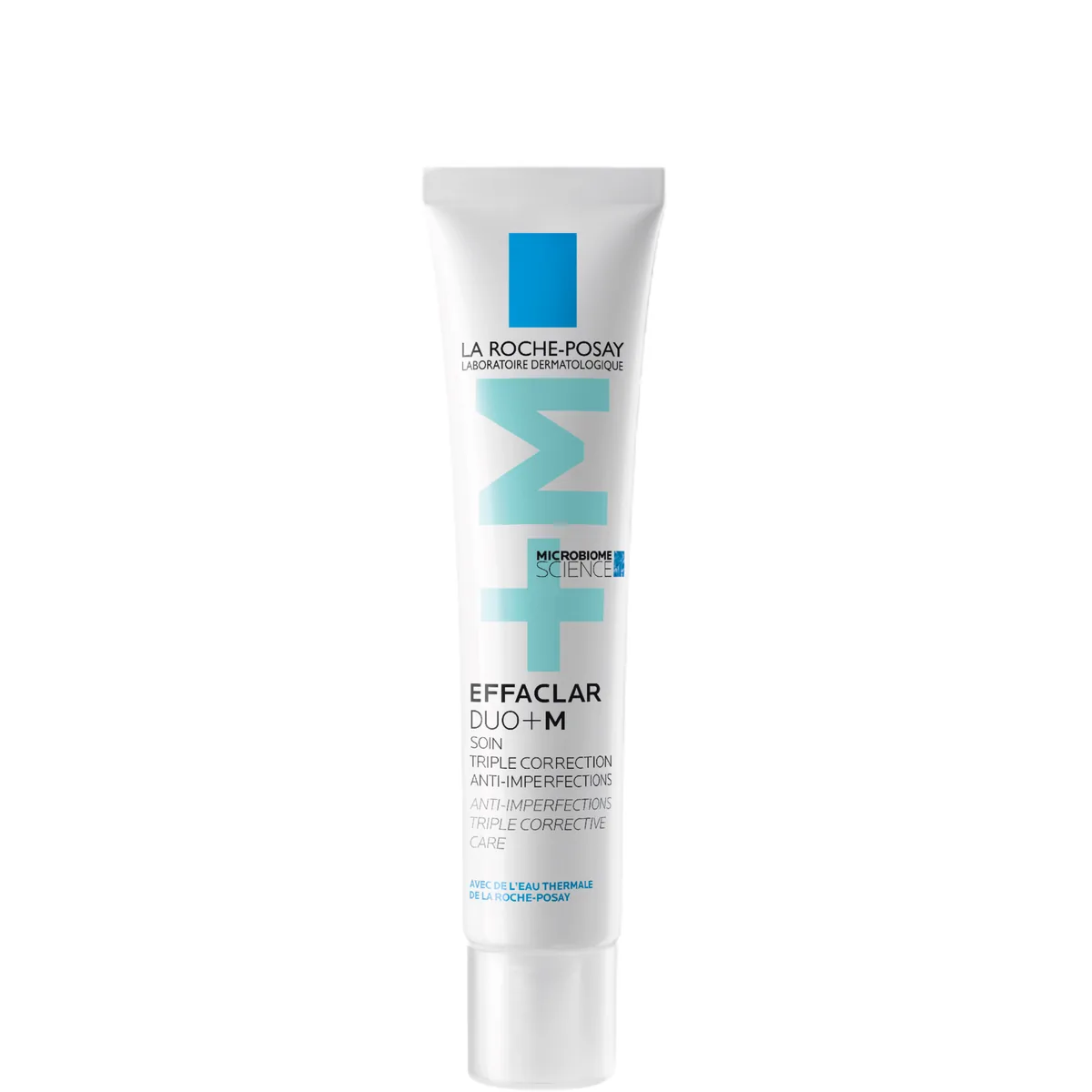
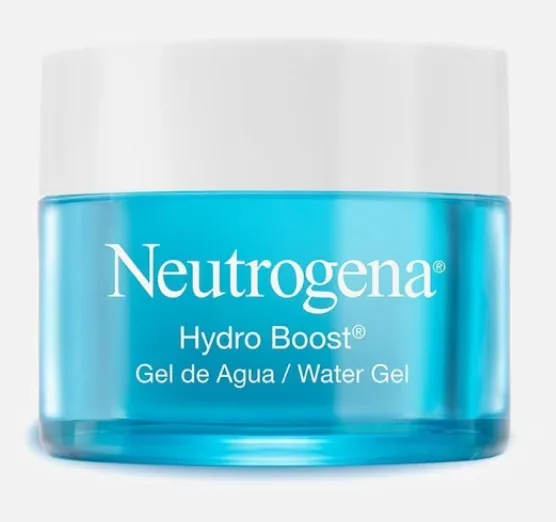
La Roche-Posay Effaclar Duo+ M vs Neutrogena Hydro Boost Water Gel
Same comparison whichever way you searched it: Neutrogena Hydro Boost Water Gel vs La Roche-Posay Effaclar Duo+ M.
 The bottom line
La Roche-Posay Effaclar Duo+ M does more across the board (it leads on barrier repair, brightening / tone, oil-control & blemishes), while Neutrogena Hydro Boost Water Gel is the simpler, more pared-back pick.
Reach for La Roche-Posay Effaclar Duo+ M if you want the actives; Neutrogena Hydro Boost Water Gel if you want fewer ingredients doing less, gently.
Answer nine questions and the app picks between them for your skin.
Cost per use
€0.63 an applicationabout 30 uses from 40 ml
measured: 2.5 fingertip units for face and neck, about 1.25 g; from €20 as read in September 2026 and a 40 ml pack.
how this is counted
About €0.63 an application, about 30 uses from 40 ml.
- Long & Finlay 1991, Clin Exp Dermatol: face and neck 2.5 fingertip units (PMID 1806320, abstract read)
- Long, Finlay & Averill 1992, Arch Dermatol: 4 hand areas = 2 FTU = 1 g (PMID 1497374)
- Finlay, Edwards & Harding 1989, Lancet: the fingertip unit defined (PMID 2567912, a letter)
- density taken as 1 g per ml: assumed, as on the sunscreen calculator
- Measured or assumed: the rule, and the dose table
€0.22 an applicationabout 40 uses from 50 ml
measured: 2.5 fingertip units for face and neck, about 1.25 g; from €9 as read in September 2026 and a 50 ml pack.
how this is counted
About €0.22 an application, about 40 uses from 50 ml.
- Long & Finlay 1991, Clin Exp Dermatol: face and neck 2.5 fingertip units (PMID 1806320, abstract read)
- Long, Finlay & Averill 1992, Arch Dermatol: 4 hand areas = 2 FTU = 1 g (PMID 1497374)
- Finlay, Edwards & Harding 1989, Lancet: the fingertip unit defined (PMID 2567912, a letter)
- density taken as 1 g per ml: assumed, as on the sunscreen calculator
- Measured or assumed: the rule, and the dose table
Per application, Neutrogena Hydro Boost Water Gel is the cheaper: €0.22 against €0.63.
Which should you pick?
Pick Effaclar Duo+ M if
- you are dealing with breakouts and oiliness
- dark spots, dullness or an uneven tone are your focus
- you want more actives working at once
Pick Hydro Boost Water Gel if
- you want the more affordable option
- your breakouts are the fungal kind (Malassezia): nothing on its label was measured to feed the yeast
- you prefer a simpler, more minimal formula
What each delivers
Side by side
| Effaclar Duo+ M | Hydro Boost Water Gel | |
|---|---|---|
| Type | Moisturizer | Moisturizer |
| Key actives | Glycerin, Niacinamide, Salicylic acid (BHA) | Glycerin, Hyaluronic acid |
| Texture | A smooth, silky lotion that spreads easily and leaves a soft, near-blurred finish. | A smooth, silky lotion that spreads easily and leaves a soft, near-blurred finish. |
| Fragrance | Contains fragrance | Contains fragrance |
| Feeds Malassezia | 1 measured / 1 inferred | none measured / 2 inferred |
| Pregnancy | No flagged actives | No flagged actives |
| Ingredients | 35 listed | 20 listed |
| Price | ~€20 | ~€9 |
What's in one but not the other
The two labels share 3 of the 52 ingredients between them. The actives are where they part company.
What each one adds acts on The living epidermis, The stratum corneum, Not established for La Roche-Posay Effaclar Duo+ M and The stratum corneum for Neutrogena Hydro Boost Water Gel. That is the layer each is understood to act on, not how deep it travels.
Only in La Roche-Posay Effaclar Duo+ M
Both
Only in Neutrogena Hydro Boost Water Gel
Neutrogena Hydro Boost Water Gel is a different bottle only for: hyaluronic acid.
Where each label stops telling you the dose
Ingredients are listed in order of how much is inside, but only down to 1%. Below that the brand may list them in any order it likes, so the bottom of a label is a set, not a ranking. These two stop being a ranking in very different places.
La Roche-Posay Effaclar Duo+ M
ordered for its first 80%
- 1Aqua/Water/Eau
- 2Glycerin
- 3Dimethicone
- 4Isocetyl Stearate
- 5Niacinamide
- 6Isopropyl Lauroyl Sarcosinate
- 7Silica
- 8Ammonium Polyacryloyldimethyl Taurate
- 9Oryza Sativa Starch/Rice Starch
- 10Punica Granatum Pericarp Extract
- 11Potassium Cetyl Phosphate
- 12Sorbitan Oleate
- 13Zinc PCA
- 14Glyceryl Stearate SE
- 15Isohexadecane
- 16Sodium Hydroxide
- 17Myristyl Myristate
- 182-Oleamido-1,3-Octadecanediol
- 19Mannose
- 20Poloxamer 338
- 21Propanediol
- 22Hydroxyethoxyphenyl Butanone
- 23Capryloyl Salicylic Acid
- 24Caprylyl Glycol
- 25Vitreoscilla Ferment
- 26Citric Acid
- 27Trisodium Ethylenediamine Disuccinate
- 28Maltodextrin
- 29Xanthan Gum
- 30Pentylene Glycol
- 31Polysorbate 80
- 32Acrylamide/Sodium Acryloyldimethyltaurate Copolymer
- 33Salicylic Acid
- 34Piroctone Olamine
- 35Parfum/Fragrance
7 of 35 sit below the line, marked by Xanthan Gum.
Neutrogena Hydro Boost Water Gel
ordered for its first 20%
- 1Water
- 2Dimethicone
- 3Glycerin
- 4Dimethicone/Vinyl Dimethicone Crosspolymer
- 5Phenoxyethanol
- 6Polyacrylamide
- 7Cetearyl Olivate
- 8Sorbitan Olivate
- 9Dimethiconol
- 10C13-14 Isoparaffin
- 11Dimethicone Crosspolymer
- 12Chlorphenesin
- 13Carbomer
- 14Laureth-7
- 15Sodium Hyaluronate
- 16Ethylhexylglycerin
- 17Fragrance
- 18C12-14 Pareth-12
- 19Sodium Hydroxide
- 20Blue 1
16 of 20 sit below the line, marked by Phenoxyethanol.
Below the line is not too little to work: ceramides, retinoids and peptides all act far under a percent. It means the position stops carrying information. Where the line falls is inferred from the first ingredient whose whole job is done at a fraction of a percent, so it is a close read of the label rather than a number from the formula sheet.
The molecule doing the work
Better for…
- Dark spots & uneven toneEffaclar Duo+ M
- Fine lines & firmnessEffaclar Duo+ M
- Breakouts & congestionEffaclar Duo+ M
- Dryness & dehydrationEither works
- Sensitive, reactive skinHydro Boost Water Gel
Who each suits
- La Roche-Posay Effaclar Duo+ M
- dry, combination, oily, normal · avoid with compromised barrier, very sensitive skin, pregnancy and very dry skin (needing an occlusive)
- Neutrogena Hydro Boost Water Gel
- dry, normal
Neutrogena Hydro Boost Water Gel is the cheaper of the two (~€9 vs ~€20).
Ready to pick one?
Affiliate links, so a purchase sends us a small commission at no extra cost to you. As an Amazon Associate, Glow Simplified earns from qualifying purchases. We make and sell nothing here, so the verdict above never bends toward a sale.
Common questions
Is La Roche-Posay Effaclar Duo+ M or Neutrogena Hydro Boost Water Gel better for dark spots & uneven tone?
For dark spots & uneven tone, La Roche-Posay Effaclar Duo+ M is the stronger pick by our read of the two formulas. La Roche-Posay Effaclar Duo+ M does more across the board (it leads on barrier repair, brightening / tone, oil-control & blemishes), while Neutrogena Hydro Boost Water Gel is the simpler, more pared-back pick. Reach for La Roche-Posay Effaclar Duo+ M if you want the actives; Neutrogena Hydro Boost Water Gel if you want fewer ingredients doing less, gently.
Which is cheaper, La Roche-Posay Effaclar Duo+ M or Neutrogena Hydro Boost Water Gel?
Neutrogena Hydro Boost Water Gel is the cheaper of the two (~€9 vs ~€20).
Can I use La Roche-Posay Effaclar Duo+ M and Neutrogena Hydro Boost Water Gel together?
They are both moisturizers, so you would normally pick one rather than layer both in the same step. You can keep both and alternate them (morning and night, or on different days) if you like variety, but you do not need two.
Compare it with…
36 duels are built for this moisturizer, CeraVe PM Facial Moisturizing Lotion and CeraVe Moisturizing Cream among them: type a name, or pick one below.